
How to Grow Lemongrass Stems from the Supermarket
This website is reader-supported - thank you! As an Amazon Associate I earn from qualifying purchases.
For homegrown lemongrass, look no further than your local produce section! Use these tips to successfully grow lemongrass stems purchased from the supermarket. It will take four to six weeks for them to develop roots, then they need to be planted in well-drained soil and encouraged to grow into a clump.
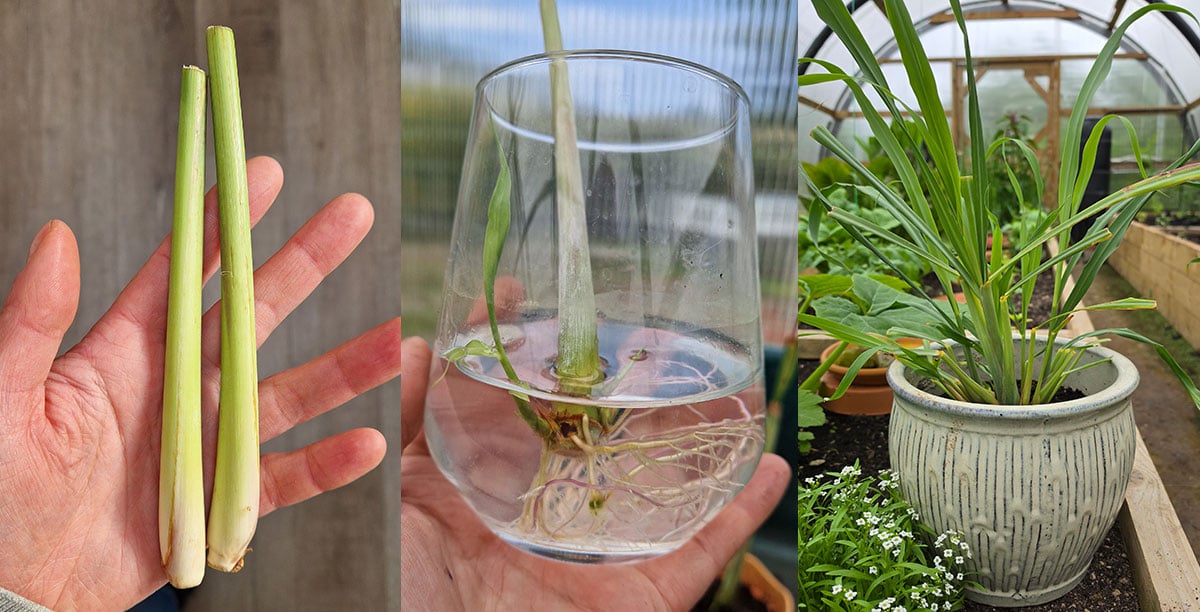
Propagating lemongrass from supermarket stems is something most people can try. In a warm sunny windowsill, they’ll start growing roots within a few weeks. Plant them up when the roots are long and strong, and leaves begin unfurling, and you’ll be on your way to a successful clump. Best of all, lemongrass can live indefinitely if you give it what it needs to thrive.
Growing your own lemongrass can be simple, but it is a tropical plant, and it will grow best in a sunny spot with plenty of fertility and moisture. Protect it from overwatering and cold, and your clump can provide flavor to soups, sauces, and Asian-inspired dishes for decades. You’ll never need to buy it from the supermarket again!
Propagating Lemongrass Plants
Growing lemongrass from seed is not difficult, but it does require attention and care. The seeds are relatively easy to source but quite small and challenging to work with. They also need a consistently warm and moist environment to grow, and even then, germination can take up to 40 days. That’s a long time to keep a tray of soil in the right conditions, so growing lemongrass from seed can be tricky, especially for beginners.
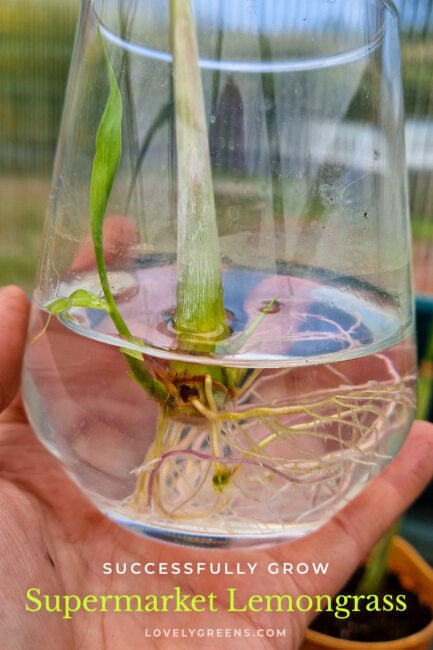
The easiest way to grow lemongrass at home is from stems broken away from an existing plant. They can be freshly pulled from a plant that a friend might have or purchased at the supermarket. That’s right—fresh lemongrass sold for cooking can grow roots and grow! Supermarket lemongrass can even be cheaper than seeds, and each stem, when rooted, can grow into a brand new plant.
Grow Lemongrass Stems in Water
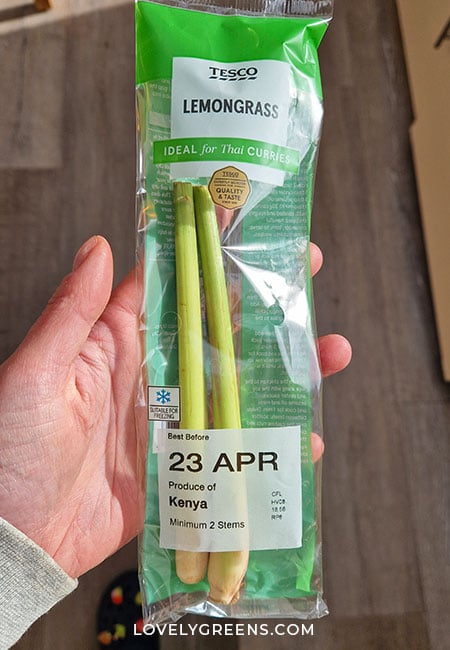
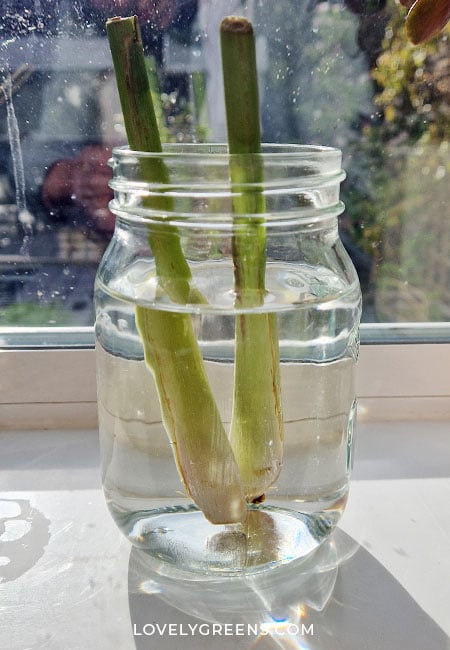
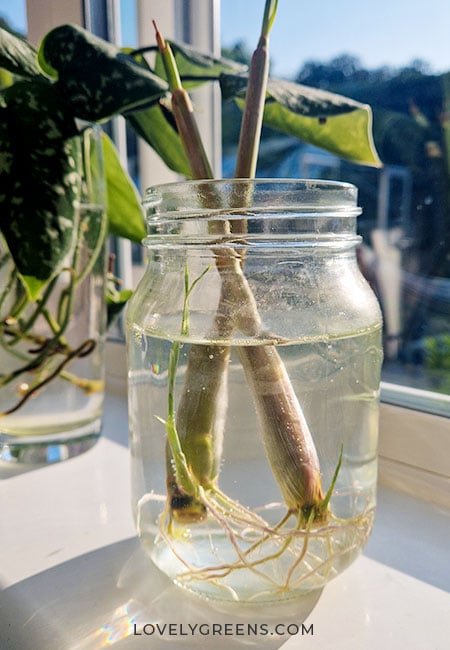
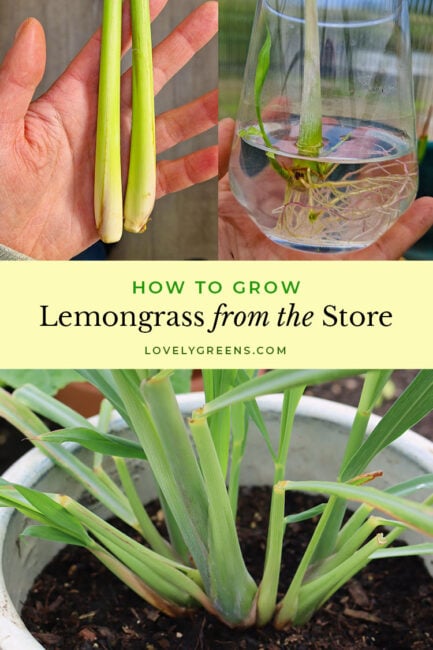
To get started, go shopping and buy the firmest, least dried-out bunch of lemongrass you can find. The ones sold in plastic pouches might be the best option, since they retain moisture. Take it home, peel back the first layer or two of leaves from the base, and pop them in a glass of water. It should completely cover the bulbous ends of the stems.
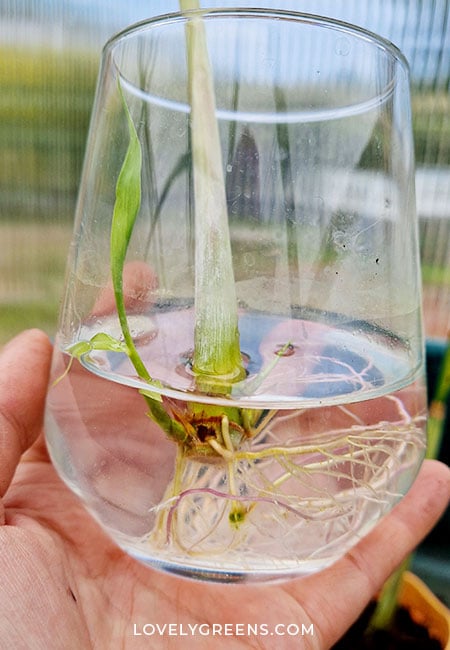
Set the glass jar on a warm and bright windowsill, and within a few weeks, roots will start to appear. Possibly even a few leaves. This works better and quicker in the growing season, but it’s possible to root the plants during the cold months, too. It just may take longer.
When the roots are about 1-2 inches long, you can trim the original stalk back a bit more, then plant each stalk in its own small pot filled with free-draining potting mix.
Planting Rooted Lemongrass Stems
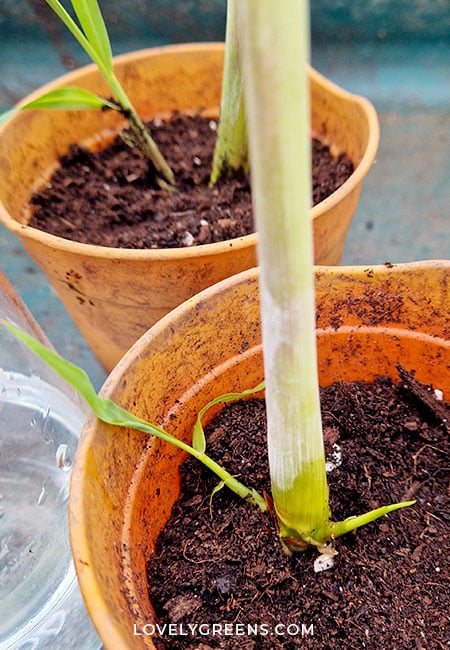
When you plant the rooted lemongrass stems, gently cover all the roots and as much of the bulbous part at the bottom as you can. Avoid planting it any deeper than just below the lowest leaves. Then give the pots a good watering, set them somewhere warm with bright, indirect light, and let them grow.
Once you see roots growing from the drainage holes at the bottom of the small pots, repot the plants into larger containers. Again, ensure that the potting mix is free-draining and nutrient-rich—a multipurpose potting mix is fine, but consider adding good compost and some grit or perlite mixed in can help improve drainage. It will help ensure good root growth but also allow excess moisture to drain away.
Once they’re large enough, you can plant them outside about 12″ apart. You can also grow them in large (12″ or more in diameter) containers to keep indoors or in a greenhouse. They love tropical conditions with full sun, moisture, and protection from wind.
Fully grown, the plant is bushy with long, thin leaves and numerous stems emerging from the soil. Though they can grow to large sizes in the ground, a container or pot constricts their roots enough to make them a perfectly viable edible houseplant.
How to Grow Lemongrass
If you live in a temperate region (zone 5-9), lemongrass can grow in a sunny location outside during summer. However, lemongrass struggles to survive below 45°F (7°C) and can die in frost, so if you do plant it outside, make sure to lift it in the autumn. Better yet, grow it in a large pot so that you can easily bring your lemongrass plants into a greenhouse or the house for the winter.
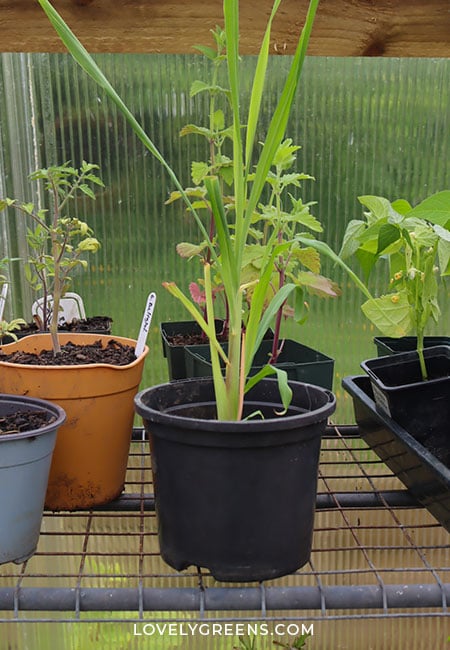
Once nighttime temperatures are above 45°F (7°C), you can move or replant them back outside. I plan to start setting my plants outside in late June and taking them back inside my polytunnel in September. There’s a lot more warmth and protection inside that will help this clump-forming perennial live to see another year.
Harvest Lemongrass Stalks
Once your plant begins to clump, you can start pulling stems for cooking. Wait until there are at least five healthy stems that are 1/2″ (13 mm) thick. Choose one from the outer edge and either cut it or snap it off at soil level.
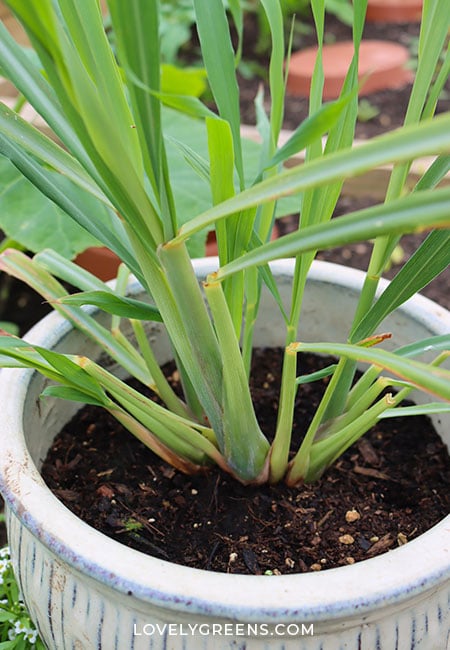
It can take at least a few months for your new plants to get to this stage, and you should only harvest during the warmer months, so patience is necessary. As the plant matures, it will form a dense clump that can be harvested relatively frequently.
Using Homegrown Lemongrass in Cooking
Lemongrass is a delicious herb that is a joy to use in cooking. The lemony-flavored base of the stem is the part you mainly use in cooking, and it’s the only part of the plant that’s edible. The leaves can be used to flavor food, too, but they need to be picked out and discarded at the end of cooking.
Freshly picked lemongrass is perfect for marinades, Thai dishes like Tom Yum soup with rice, Malaysian curries, or even a refreshing, lemony tea. You can also freeze the stems and leaves and use them as needed, straight from the freezer.
No worries :) When you're first starting to grow lemongrass you should pot it up in small 3" pots first then gradually pot on to larger pots as it grows. The plant will eventually out-grow every pot you plant it in so once it's in a decent sized pot (say 2' or more) you need to either take stalks out to use in cooking or to create new plants with.
OH sorry its the same person as ^ anyways can the lemongrass stay in the same size pot for its whole existance
How big should the pot be?
Thanks for visiting, Sensory Dragon! And yes, I follow your blog too – I love seeing what other gardeners are up to :)
Hi Tanya, I dropped in to have a look at your blog after discovering that you're now following mine (thank you, by the way!); it's lovely! I'm in the early stages of creating a garden and keeping a record of it in my blog – it's great to see the potential of what I might achieve by looking at yours. I'll be keeping an eye on it for lots of useful info and advice!
Well done Kathrin :)
… and done :-)
Wow… Thanks, that sounds easy enough for me to do it :-)
Thanks Mrs Bok & Mo :)
Clever! :)
Great tip thank you! I do this with spring onions.
Thanks for stopping by Dani and am glad to help :)
Thanks Tanya – I have a very old (woody?) lemongrass plant which I now know how to help :)